


Why Legal Consultant Interviews Matter in the UK Legal Market
General 12.06.2026
Prepare for a legal consultant interview in the UK with expert tips, common questions, practical answers, and strategies to impress employers
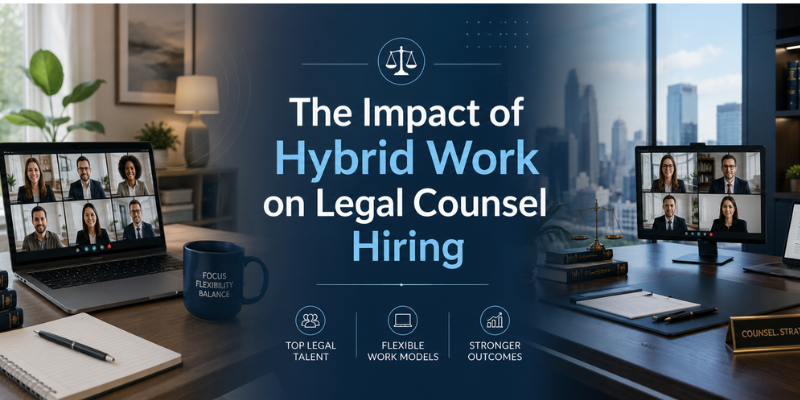
Hybrid working has moved from being a temporary pandemic response to a defining feature of the UK legal employment market. For employers, HR managers, General Counsel and Legal Directors, this shift has changed how Legal Counsel roles are designed, advertised and filled. For legal professionals, it has changed what a competitive opportunity looks like.
The demand for flexible working is especially relevant in the in-house legal market. Legal Counsel professionals are expected to advise commercially, manage risk, support senior stakeholders and respond quickly to regulatory or contractual issues. Many of these responsibilities can be performed effectively through a well-structured hybrid model, provided there is the right technology, communication culture and governance framework in place.
In the wider labour market, official UK data has shown that hybrid work is now a common working pattern, particularly among professional and managerial roles. This aligns closely with the legal sector, where many candidates now assess Legal Counsel jobs UK not only by salary and title, but also by flexibility, culture, technology and career development.
For employers competing for strong legal talent, hybrid working is no longer a minor benefit. It is a strategic recruitment factor. The Legists, as a trusted UK legal recruitment and job board platform, helps employers reach qualified legal professionals across the country while supporting candidates searching for in-house legal jobs, remote legal jobs UK and flexible Legal Counsel opportunities.
Hybrid working is a working arrangement where employees divide their time between the office and another location, usually home. In legal roles, this often means spending part of the week in the office for meetings, team collaboration, training, board interaction or complex stakeholder discussions, while completing drafting, research, contract review and advisory work remotely.
Since the pandemic, law firms and in-house legal teams have adopted a wide range of flexible working models. Some employers require two or three office days per week. Others use team-based anchor days, where legal, compliance and commercial teams attend the office together. Some organisations allow greater flexibility for senior Legal Counsel professionals, particularly where the role is output-driven and involves autonomous advisory work.
This change reflects evolving employee expectations. Legal professionals increasingly want high-quality work without unnecessary commuting, rigid office attendance or outdated management practices. However, hybrid working in the legal sector is not simply about location. It requires clear supervision, secure systems, disciplined communication and trust.
For employers, the key question is not whether hybrid work is possible, but how it can be structured in a way that protects confidentiality, supports collaboration and maintains legal service quality.
One of the most significant Legal Counsel hiring trends is the expansion of the talent pool. Employers are no longer limited to candidates who live within daily commuting distance of London, Manchester, Birmingham, Leeds, Edinburgh or other legal hubs.
A company based in London may now consider an experienced Legal Counsel living in Bristol, Cardiff, Glasgow or Newcastle if the role requires only periodic office attendance. Similarly, regional employers can attract candidates who previously would have focused only on major City opportunities.
This is especially important for specialist legal roles. Employers seeking expertise in data protection, financial services regulation, commercial contracts, technology, intellectual property, employment law or energy may struggle to find the right candidate locally. Hybrid working allows them to access specialist legal talent across the UK.
For candidates, this creates more choice. A Legal Counsel professional can now consider roles based on quality of work, sector exposure, leadership style and progression rather than location alone. Platforms such as The Legists make this search easier by connecting employers and candidates across a broader UK legal recruitment market.
Hybrid working has also increased competition. Strong Legal Counsel candidates often have several options, including fully office-based roles, hybrid roles, consultancy-style arrangements, interim opportunities and remote legal jobs UK.
This means employers must work harder to stand out. A vague reference to “flexible working available” is no longer enough. Candidates want to know how many office days are expected, whether flexibility is genuinely supported by leadership, how meetings are managed, what technology is provided and whether remote employees have the same access to progression.
Employer branding now plays a central role in legal recruitment UK. Legal professionals are looking for evidence that flexibility is part of the culture, not simply a line in the job advert. Organisations that communicate their working model clearly, explain their values and demonstrate respect for work-life balance are more likely to attract high-calibre applicants.
Hybrid work has encouraged employers to focus more closely on skills, judgement and commercial capability. Location still matters for some roles, especially where board attendance, regulatory interaction or business partnering is heavily office-based. However, it is no longer the first filter for many in-house legal jobs.
Employers are increasingly prioritising:
For Legal Counsel jobs, this skills-first approach is positive. It allows employers to assess what truly drives success in the role. It also gives candidates outside traditional legal centres a stronger chance of accessing high-quality opportunities.
First, it improves talent attraction. Legal Counsel professionals are more likely to engage with roles that offer meaningful flexibility. In a competitive market, this can increase application quality and reduce time to hire.
Second, hybrid working can improve retention. In-house lawyers often handle demanding workloads, urgent commercial requests and complex risk decisions. Flexibility can support better work-life balance, reduce burnout and help retain experienced legal professionals who might otherwise move to a more flexible employer.
Third, it can reduce office costs. While legal teams still benefit from in-person collaboration, not every task requires a desk in the office five days a week. Hybrid models can support more efficient workspace planning.
Fourth, hybrid work can enhance diversity and inclusion. Flexible arrangements can widen access for candidates with caring responsibilities, disabilities, regional commitments or other circumstances that make traditional office attendance difficult. For employers serious about inclusive hiring, flexibility should be part of a broader talent strategy.
Finally, hybrid work can support productivity. Many Legal Counsel tasks, such as drafting contracts, reviewing policies, preparing board papers or researching regulatory issues, require focused time. Remote working can provide fewer interruptions, while office days can be reserved for collaboration and relationship-building.
One of the biggest challenges in hybrid legal recruitment is assessing cultural fit without relying solely on in-person interaction. Legal Counsel roles require judgement, emotional intelligence and the ability to influence non-lawyers. These qualities can be harder to evaluate through a short video interview.
Employers should use structured interviews, scenario-based questions and stakeholder conversations. For example, candidates can be asked how they would handle a commercial team pushing for a high-risk contract position, or how they would advise a board on a sensitive compliance issue.
Legal teams rarely work in isolation. They collaborate with sales, procurement, finance, HR, compliance, product, operations and senior leadership. Hybrid working can create communication gaps if expectations are unclear.
Employers should define when legal team members are expected to attend key meetings, how urgent matters are escalated, which channels are used for advice and how knowledge is shared. A successful hybrid legal team needs intentional communication, not constant communication.
Confidentiality is central to legal work. Remote working introduces additional risks around document access, data protection, privilege, cyber security and secure communication.
Employers hiring hybrid Legal Counsel professionals must ensure that remote working policies are aligned with legal and regulatory obligations. Secure devices, encrypted systems, access controls, document management tools and clear confidentiality protocols are essential.
Onboarding is another challenge. New Legal Counsel hires need to understand the business, risk appetite, key stakeholders, internal processes and commercial priorities. This is more difficult when early relationship-building happens partly online.
A strong onboarding plan should include scheduled introductions, shadowing opportunities, legal team playbooks, regular manager check-ins and early exposure to business stakeholders. Employers should not assume that a senior candidate can “work it out” alone.
Legal Counsel candidates now assess opportunities more carefully. Salary remains important, but it is only one part of the decision.
Most candidates want clarity on flexible working arrangements. They want to know whether hybrid working is formalised, whether office days are fixed or flexible, and whether senior leaders support the model.
Competitive salaries also remain essential. Hybrid work should not be used as a substitute for fair market pay. Strong candidates understand their value, especially in specialist areas such as technology, privacy, financial regulation, corporate governance and commercial contracts.
Career progression is another major factor. Some candidates worry that remote or hybrid workers may be less visible for promotion. Employers should explain how performance is measured, how development is supported and how Legal Counsel professionals can progress into Senior Legal Counsel, Head of Legal, Legal Director or General Counsel roles.
Wellbeing support also matters. Legal work can involve pressure, deadlines and sensitive matters. Candidates increasingly value employers that take workload management, mental health and sustainable performance seriously.
Modern legal technology is also becoming a differentiator. Candidates expect efficient contract management systems, collaboration tools, e-signature platforms, secure document storage and sensible use of AI or automation where appropriate.
Job descriptions should clearly explain the hybrid model. Instead of saying “hybrid working available”, employers should specify expected office days, flexibility around location, travel requirements and whether the arrangement may change.
They should also focus on outcomes. A strong Legal Counsel job description should explain the business context, reporting line, key responsibilities, required experience and success measures.
Employers should be transparent about flexible working policies. This includes explaining how requests are handled, how hybrid working is supported and how the organisation balances flexibility with business needs.
This is particularly important because UK employees have a statutory right to request flexible working. Employers that show a mature, fair and consistent approach are likely to build greater trust with candidates.
Hybrid legal recruitment benefits from efficient digital tools. Video interviews, online skills assessments, digital document sharing and applicant tracking systems can speed up the process.
However, technology should not make recruitment impersonal. Legal hiring still requires judgement and relationship-building. Employers should combine digital efficiency with thoughtful candidate communication.
Employer branding is now central to attracting Legal Counsel talent. Candidates want to understand the culture before they apply.
Employers should highlight legal team structure, leadership style, diversity commitments, flexible working approach, technology investment and career development. They should also make sure their recruitment process reflects the culture they claim to offer.
Generalist job boards may generate volume, but specialist platforms help employers reach more relevant legal talent. The Legists supports legal recruitment UK by helping employers advertise roles to candidates actively seeking legal opportunities.
For Legal Counsel hiring, this matters. A specialist UK legal jobs board can improve visibility among qualified candidates who understand the in-house legal market and are actively considering their next move.
The Legists plays an important role in the evolving legal recruitment market by connecting employers with legal professionals across the UK. For organisations hiring Legal Counsel, the platform provides access to candidates looking for private practice, in-house, public sector and specialist legal roles.
For employers, The Legists offers a focused route to market. Instead of relying only on broad recruitment channels, organisations can position Legal Counsel opportunities in front of professionals who are already engaged with the legal jobs market.
For candidates, The Legists provides a practical way to explore Legal Counsel jobs UK, in-house legal jobs and flexible legal opportunities. The platform supports job search visibility, role discovery and career movement across the legal profession.
As hybrid working continues to reshape recruitment, The Legists is well placed to support both sides of the market. Employers can use the platform to communicate their value proposition, while candidates can identify roles that align with their skills, lifestyle and long-term career goals.
Hybrid and remote legal roles are likely to remain part of the UK legal employment landscape. While some organisations are increasing office attendance requirements, many legal professionals still expect flexibility, particularly in senior and specialist roles.
Legal technology will also influence hiring. As AI, contract automation, knowledge management and digital collaboration tools become more common, employers will value Legal Counsel candidates who can combine legal judgement with technological confidence.
There will also be greater emphasis on employee experience. Legal professionals want meaningful work, supportive leadership, flexibility, career development and efficient systems. Employers that ignore these expectations may struggle to attract and retain top legal talent.
Another trend is the continued growth of in-house legal teams. As businesses face regulatory complexity, commercial risk, data protection challenges and ESG expectations, the need for commercially minded Legal Counsel professionals remains strong.
The most successful employers will be those that treat hybrid working as part of a broader talent strategy rather than a short-term benefit.
Hybrid work has fundamentally changed Legal Counsel hiring in the UK. It has widened talent pools, increased competition for strong candidates, shifted attention from location to capability and raised expectations around flexibility, technology and wellbeing.
For employers, the message is clear: recruitment strategies must adapt. Clear job descriptions, transparent flexible working policies, strong employer branding and secure digital processes are now essential. For candidates, hybrid working has created greater choice, but also a need to demonstrate communication, independence, commercial judgement and digital confidence.
The Legists helps employers and legal professionals navigate this changing market. As a trusted UK legal recruitment and job board platform, The Legists connects organisations with qualified legal talent and helps candidates discover Legal Counsel jobs UK, in-house legal jobs and flexible legal opportunities.
In a market shaped by hybrid working, the organisations that succeed will be those that combine flexibility with clarity, trust with accountability and technology with human judgement.
Yes. Hybrid working has become more established across many professional sectors, including legal services and in-house legal teams. While the exact model varies by employer, many Legal Counsel roles now include a mix of office-based and remote working.
Employers look for strong legal knowledge, commercial awareness, clear communication, stakeholder management, independent judgement and digital confidence. In hybrid roles, candidates must also show that they can collaborate effectively across remote and office-based teams.
Employers should offer competitive salaries, clear flexible working arrangements, strong career progression, modern legal technology and a positive workplace culture. Advertising roles through specialist legal recruitment platforms such as The Legists can also improve access to relevant candidates.
Hybrid working can reduce commuting time, support work-life balance, improve focus for drafting and advisory work, and create access to roles beyond a candidate’s immediate location. It can also help legal professionals manage demanding workloads more sustainably.
Key risks include weaker collaboration, inconsistent communication, data security issues and poor onboarding. These can be managed through clear policies, secure technology, structured supervision and regular team interaction.
The Legists helps employers advertise legal vacancies to a UK-wide audience of legal professionals. It supports candidates searching for Legal Counsel jobs UK, in-house legal jobs and flexible legal opportunities, while helping employers improve visibility in a competitive legal recruitment market.
Yes. Employers should be specific about the working pattern, office expectations, location requirements and flexibility available. Clear information improves candidate trust and helps attract applicants who are genuinely aligned with the role.
General 12.06.2026
Prepare for a legal consultant interview in the UK with expert tips, common questions, practical answers, and strategies to impress employers
General 11.06.2026
In this article, we explore why future lawyers must broaden their skill set, how AI is influencing the legal job market, and practical steps students can take to prepare for a career in an AI-driven
General 29.12.2025
The article explains criminal law as a career in the UK, focusing on salary, career progression, and job opportunities. It states that the average criminal lawyer salary ranges from £30,000 to £60,
Receive regular news, updates, upcoming events and more...
Please complete all the required fields.
Please provide a valid email address.

